Ben Gurion – Arrival
Just as dawn breaks over Tel Aviv so the overnight flights from Europe begin to arrive at Ben Gurion airport. We actually arrived a little early so as we came in over the coast my first sight of Tel Aviv was of the roads still lit with the orange glow of street lights. Out of the plane window I was surprised to see how much traffic was already out and about. As you well know all the main roads in the city run parallel with the coastline so as we crossed over them in turn there already seemed to be traffic jams on most of them. I didn’t know then that many Israelis go to work at dawn to avoid having to work in the heat of the afternoon.
Looking out the window I got my first glimpse of the countryside as the plane continued its descent towards the runway.
In time and after many more flights I was to become familiar with the landing approach. Several years later when I was employed in the Airline Industry I made several flights to Israel at the last minute and being on standby would not always ensure you a seat, but one option available at the discretion of the Captain was to offer staff members the jump-seat in the cockpit. Numbered among my customers at the Airline were all the Flight crew so it was easy to discover who the Captain was and to have a friendly word in his ear. This meant that several times I was actually on the flight deck for take-off and landing.
The approaches to many airports are famous for their sights. Coming into Heathrow one gets the view of either Windsor Castle or Canary Wharf and Central London, dependant on which way the wind is blowing. For Copenhagen, there is the majestic sight of an army of windmills in the Oresund between Denmark and Sweden. For the old Hong Kong Airport, there was the legendary descent through the high rise buildings (terrifying the first time you did it). For Tel Aviv, you got a close up of the city dump.
The Hiriya Landfill site (Shit Mountain)
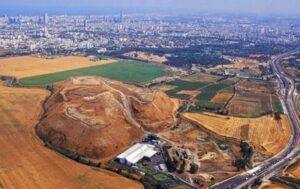
The Hiriya Landfill site, to give the place its correct name used to receive over 4500 tons of waste per day and at its closure in 1999 it measured over half a mile in length and was over 80 metres above sea level. On a bad day, it could be smelt miles away and earned the nickname “Shit Mountain” from the locals.
After its closure in 1999, it was transformed into a park so at least now that is the sight you see on turning finals.
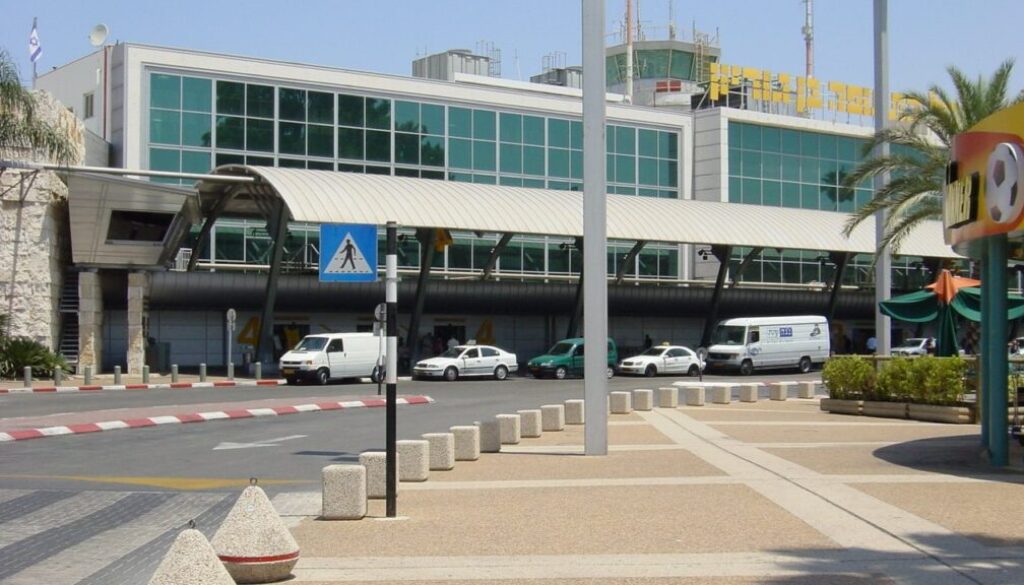
The airport was chaotic but coolly efficient and the warm blast of air as we exited the plane was a pleasant surprise. Given the time of day, I was definitely not expecting the temperature to be so high. But the temperature combined with the air humidity was definitely not something I was prepared for but it was something I became used to with time. Exiting from an air-conditioned bus or coach into the heat of the day was often a shock. On the coast, it was like being hit in the face with a warm wet towel. Further inland the dryness of the air could actually scorch the breath from your lungs making it difficult to breathe.
A shuttle bus took us over to the terminal building where we passed through immigration with a minimum of fuss. It seemed that as long as you had convinced the security detail in London that you were OK then the rest of the country welcomed you with open arms, a sweet smile, and a big blue stamp in your passport that said valid for three months.
This had at least been explained to us before we left England. In an attempt to curtail the number of beach bums and workers in the black economy, you were required to have a valid tourist visa stamp in your passport. If you thought that there might be problems travelling in the future with an Israeli stamp in your passport then on arrival you could ask for the stamp to be put on the landing card and then provided you kept both pieces of paper together there would be no problem.
If you were staying at a recognized ‘Tourist’ place of work, like a Kibbutz then the visa would be renewed every three months and the cost covered by the Kibbutz. If you left or were thrown off the kibbutz then you could only get a one-month extension, unless you left the country and re-entered at which point you would be issued with another three-month visa. What they failed to tell us was that when you renewed your visa on the Kibbutz and there was no landing card in your passport then the Visa people would simply stamp your passport on the next available page.
Since the introduction of the rules regarding tourist visa extensions in 1982, there had been a growth in the number of people drifting over the Egyptian border and down to Dahab, where they could get stoned on Bedouin hashish for a week and then pick up a new visa on the way back across the border. For us, this modern-day version of the hippy trail was in our future. So with our passports and visas tucked securely in our pockets we bravely strode out into the land of Israel.
When that door opens and you are confronted by a sea of smiling faces, all strangers, and you have to run the gauntlet past them all, pushing the one luggage trolley with the defective wheel that squeals like a castrated pig and pulls the whole cart alarmingly to the left threatening to crash you and trolley into the innocent welcoming committee, it becomes a real walk of shame. A thousand eyes boring into your soul. But we were both still pretty sloshed from the flight so it was like water off a duck’s back.
And instead of dying of shame on the spot, we crossed the road from the terminal building and boarded the Airport Bus to take us into downtown Tel Aviv.
Now before leaving London we had done some research into this kibbutz thing. Enough of our friends had been out there, with varying degrees of success. Some returned after a few weeks with horror stories of concentration camp living conditions and slave labour working, which we chose to ignore, others after several months with gorgeous tans and stories of the good life, which we chose to believe.
Being the type of people we were, we had shunned the ‘organised’ trip where you are all gathered at the Airport and ferried to your kibbutz in a minibus, part of a nameless and faceless group. These groups are usually recruited at a time of need like harvest time and are put to work in a large group and remain as that group until they leave at the end of their stay. We were individuals and we wanted our own adventure, so armed with an address and a rather vague set of directions we went looking for the Kibbutz Representatives Office in Tel Aviv.